








If you manage a modern office, you’ll be looking for modern solutions to problems involving energy efficiency and cost reduction so you can create a more comfortable working environment. One piece of technology playing an important part in this transition is the motion sensor, which offers practical advantages for businesses looking to make their workplaces more efficient.
A smart motion detector identifies movement within a designated area, typically using passive infrared (PIR) technology to detect changes in heat radiation. Unlike conventional motion detectors, smart models communicate with connected building management systems, triggering automated responses when movement is detected. A smart movement sensor allows offices to reduce unnecessary energy consumption and improves the response of building systems.
How Smart Motion Sensors Benefit Offices
How Smart Motion Sensors Benefit Offices
Automated Lighting and Energy Savings
Automated Lighting and Energy Savings
One of the most common applications of an office motion sensor is in automated lighting control. Sensors detect when employees enter certain areas of a building and send signals to lighting systems to activate when required. When movement is no longer detected, lighting will switch off after a configured period, reducing electricity waste from lights remaining on in unoccupied spaces.
Smarter Heating and Ventilation
Smarter Heating and Ventilation
HVAC systems account for a significant chunk of office energy consumption. Integration with compatible controls allows motion sensors to adjust heating and ventilation based on detected activity. As an example, a meeting room could automatically transition to an energy-saving setting after employees leave.
Improved Office Security
Improved Office Security
Smart motion sensors also support workplace security; when movement is detected in restricted areas or outside business hours, alerts can trigger through compatible security systems, helping facilities managers identify unexpected activity. This provides an additional layer of monitoring without requiring constant manual supervision.
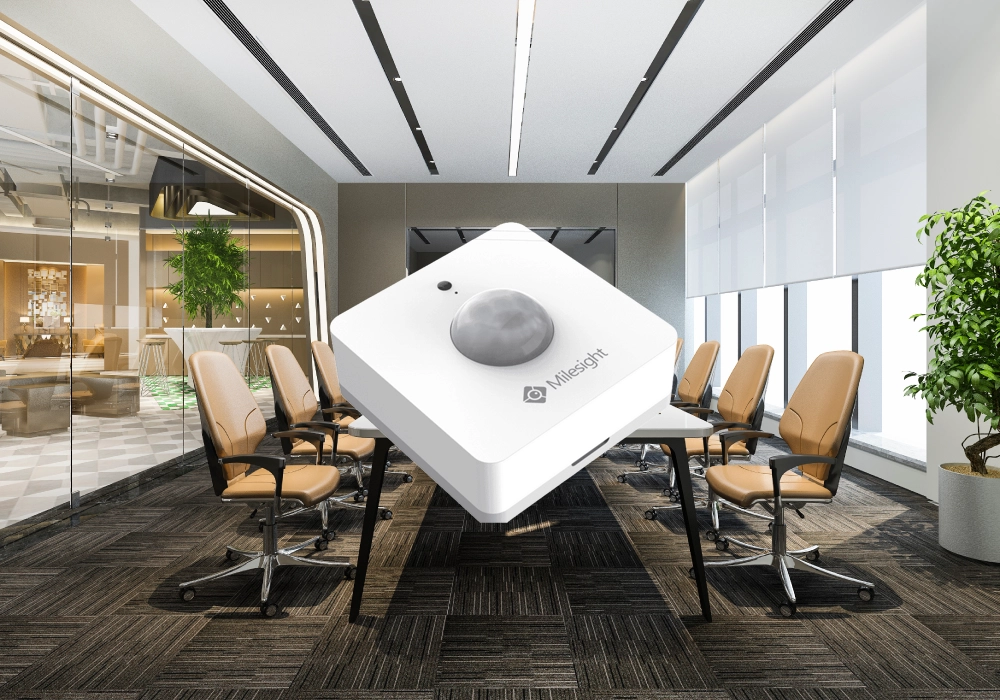
Smart Motion Sensors vs Smart Occupancy Sensors
Smart Motion Sensors vs Smart Occupancy Sensors
Both the motion sensor and occupancy sensor detect human activity, however, smart motion sensors primarily identify movement within a space (they’re particularly effective for triggering automated actions when someone enters or moves through an area). Conventional PIR motion sensors may struggle to detect people who remain relatively still, as is the case for employees working at desks.
Smart room occupancy sensors are designed to determine whether a space is occupied, with some models using technologies such as radar to detect subtle movements. Occupancy sensors are generally rather useful in meeting rooms and workspaces where employees remain seated for extended periods. Selecting the appropriate technology depends on how each office area is used.
