





Shop/Products // Smart Thermostats and Room Controllers //

Smart Thermostats and Room Controllers

Smart thermostats and room controllers set and hold the temperature in an individual room or zone, and report back to your building management system so it can be scheduled and monitored centrally. Unlike a traditional dial on the wall, they can be adjusted remotely, locked to a permitted setpoint range, and set back automatically when a space is empty or out of hours.

Our range covers wireless room units for offices, classrooms and meeting rooms, fan coil controllers for four pipe systems, and room operating panels with display and occupancy sensing built in. Because they communicate over LoRaWAN or EnOcean, most can be retrofitted into existing buildings without running control cabling, which makes them a practical option where a wired BMS upgrade would be prohibitive.

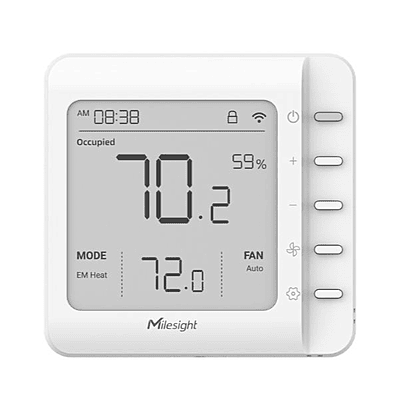
Smart Thermostats and Room Controllers

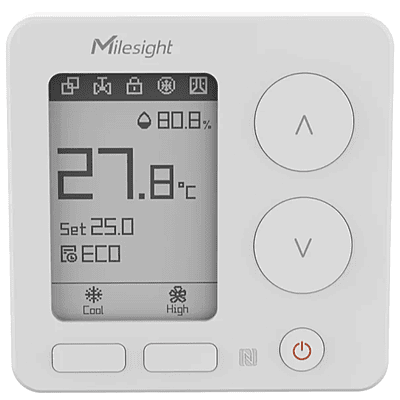
Milesight WT201
£105.00
Milesight WT201Add to Cart
£105.00
Milesight WT211 Smart Thermostat front view.
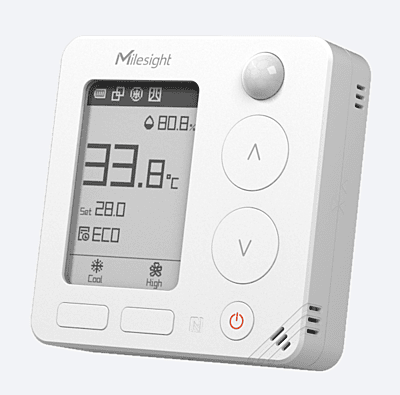
Milesight WT211 Smart Thermostat
£115.00
Milesight WT303 front view.
Milesight WT303 Smart Fan Coil Thermostat
£99.00
Milesight WT401 Wireless Smart Thermostat
£89.00
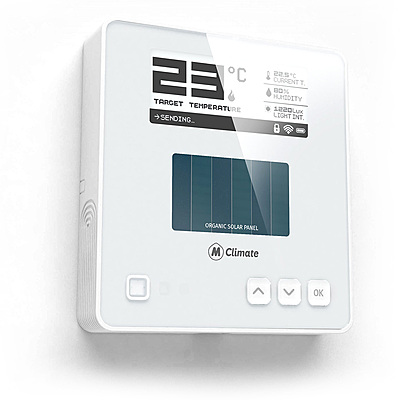
MClimate Wireless Thermostat LoRaWAN
£189.00
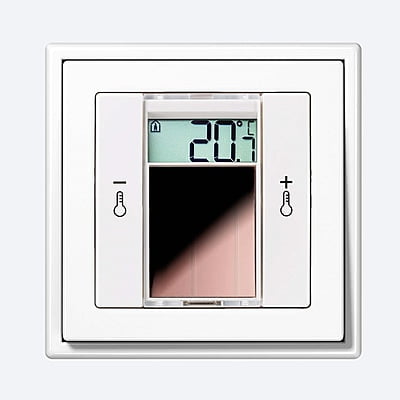
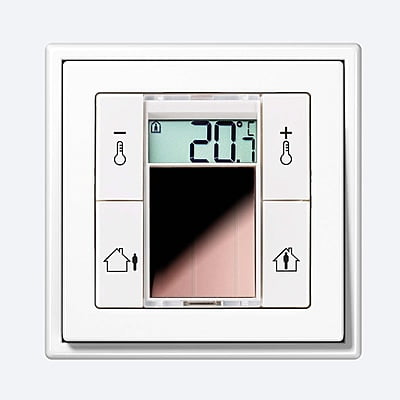
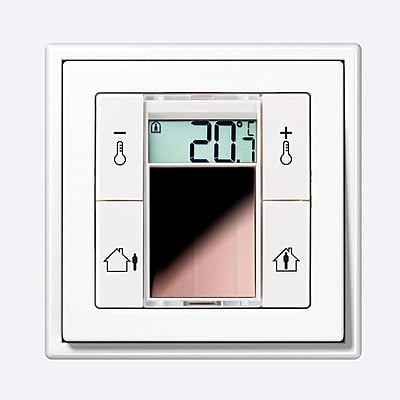
SR06 LCD 2T White
SR06 LCD 2T White
£145.00
SR06 LCD 2T WhiteAdd to Cart
£145.00
SR06 LCD 2T Aluminium
£171.00
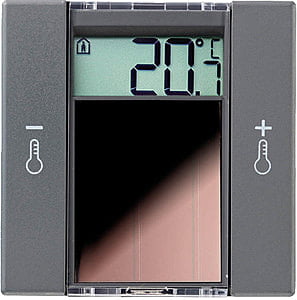
Thermokon SR06 LCD 2T Temp Anthracite
£175.00
SR06 LCD 4T rH White Type 3
£192.00
SR06 LCD 4T White Type 3
£155.00
Thermokon SR07 White
£160.00

FAQ

How do smart thermostats work?
A smart thermostat does the same core job as any thermostat, which is to measure the temperature in a space and call for heating or cooling until the setpoint is reached. What makes it smart is that it's also a network device, so it can be told what to do from elsewhere and can report what it is doing back.
An internal sensor takes the room temperature, often alongside humidity and occupancy. The unit compares that reading to its setpoint and drives an output, which might be a valve, a fan coil unit's valve and fan speed, or a relay to a heat source. At the same time it communicates wirelessly over LoRaWAN or EnOcean to a gateway, and on to a building management system or monitoring platform. That two way link is what changes the picture; from the head end you can push schedules to every room, apply setback temperatures out of hours, limit how far occupants can adjust the dial, and see the actual temperature and setpoint in each space rather than guessing. Many units also respond to occupancy or an open window, dropping back automatically when a room is empty or being aired.

Power depends on the model. Most run on batteries with a life measured in years, and EnOcean devices harvest energy from light or from the act of pressing a button, so they need no power supply and no data cabling at all.
What is the difference between a smart thermostat and a regular thermostat?
A regular thermostat is a standalone device. It measures the room, switches an output, and that is the extent of it. Whatever it is set to is what the room gets, and the only way to find out what that is, or to change it, is to walk up to it. The differences that matter in a commercial building are:
Remote control: Setpoints and schedules are set centrally rather than room by room, which is the difference between a five minute change and a day walking a building.
Visibility: You can see the actual temperature, the setpoint and whether the space is occupied. A conventional thermostat tells you nothing until someone complains.
Setpoint limiting: Occupants keep a degree of local control, but within a range you define, so no one can set a room to 28 degrees and leave it.
Occupancy response. Many smart units set back automatically when a room is empty or a window is open, which a mechanical or basic digital thermostat cannot do.
Data:  Temperature and runtime history supports energy reporting, complaint investigation and evidence of savings after a project.
Installation: Traditional networked room controllers needed control cabling back to a panel. Wireless smart thermostats do not, which is what makes them viable in occupied and listed buildings.

The practical distinction is that a regular thermostat controls a room, while a smart thermostat lets you manage a building.
Items have been added to cart.
One or more items could not be added to cart due to certain restrictions.
Added to cart
- There was an error adding to cart. Please try again.
Quantity updated
- An error occurred. Please try again later.
Deleted from cart
- Can't delete this product from the cart at the moment. Please try again later.