





Shop/Products // Energy Monitoring and Current Sensors //

Smart Energy Monitoring and Current Sensors

Energy monitoring sensors show you where a building's consumption actually goes, circuit by circuit, rather than leaving you with a single figure on a quarterly bill. Split core current transformers and Rogowski coils clip around existing cables without breaking the circuit, so there is no rewiring and no need to shut anything down. Pulse counters do the same job for existing electricity, gas, water and heat meters, reading the output of a meter you already have and sending it wirelessly.


Typical uses include sub metering tenanted areas for recharging, isolating which plant is driving out of hours consumption, verifying savings after an energy efficiency project, and catching equipment faults early through unusual current draw.


Readings are reported over LoRaWAN, so most installations need no data cabling and take minutes per circuit.
Energy Monitoring and Current Sensors

Milesight CT101-V2 LoRaWAN Current Sensor
£68.00
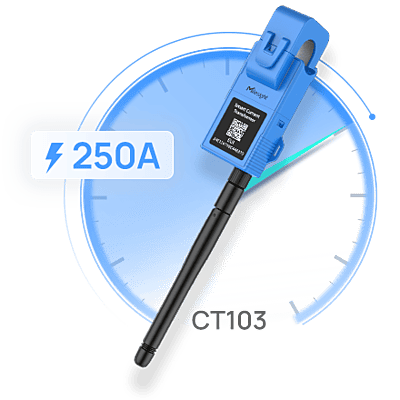
Milesight CT103 LoRaWAN Current Sensor
£79.00
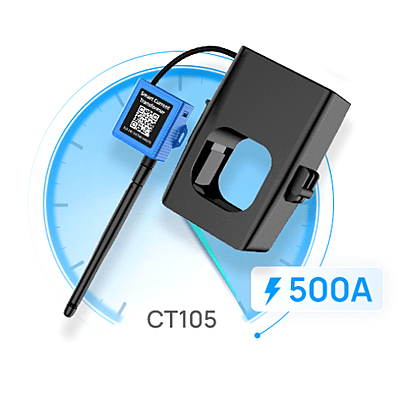
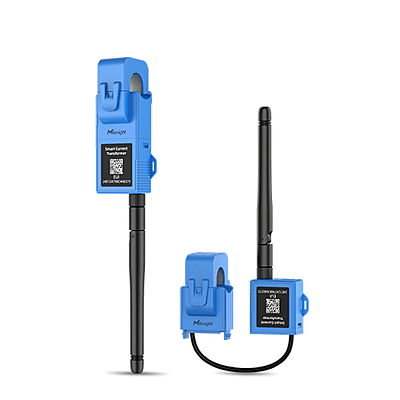
Milesight CT105-868M Smart Current Transformer
£79.00
Milesight CT303 Current Transformer-300A
£115.00
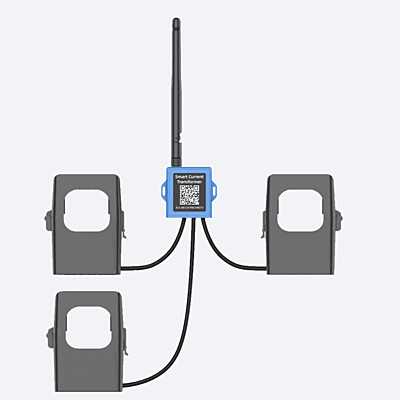
Mileisght CT3xx Current Transformer
Milesight CT3xx Current Transformer
£155.00 - £248.00
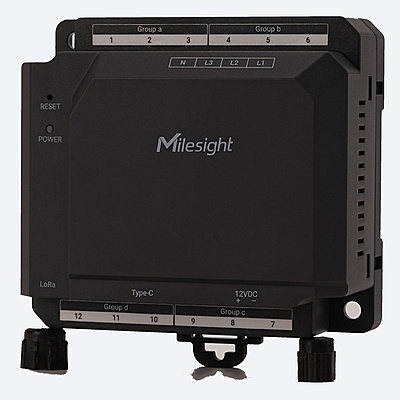
Milesight CTH01 Smart Power Monitor Hub
£290.00
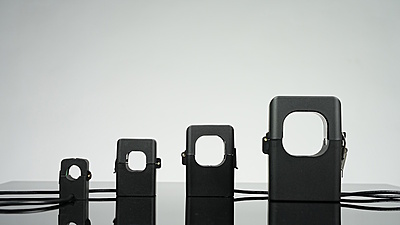
Milesight CTH01 Current Transformers
£31.00 - £119.00
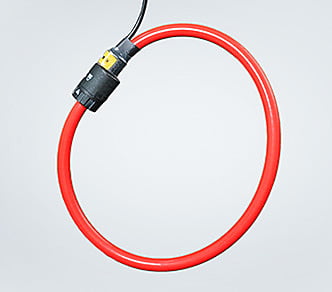
Milesight RRC-RJ11 Rogowski Coil
£198.00
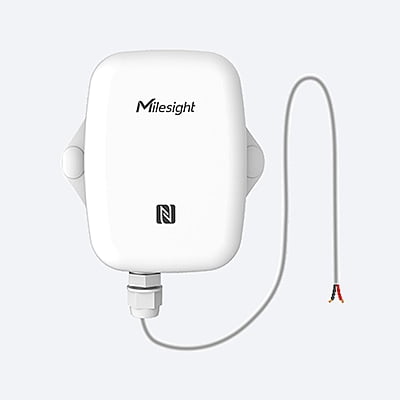
Milesight EM300-DI Pulse Counter
£55.00
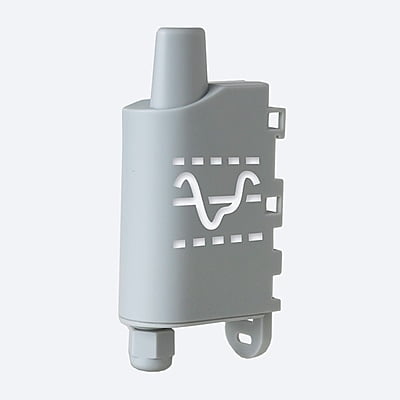
Adeunis LoRaWAN Current Sensor: Current Measurement
£115.00
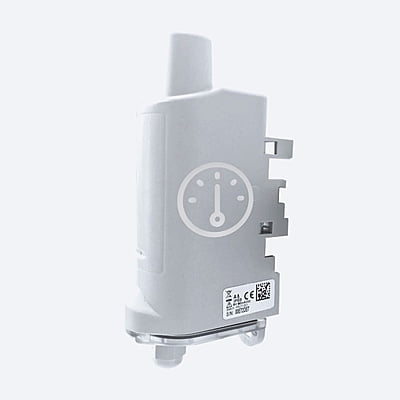
Adeunis Pulse ATEX: LoRaWAN impulse interface
£99.00
Adeunis Pulse IP68: LoRaWAN Pulse Transmitter
£89.00
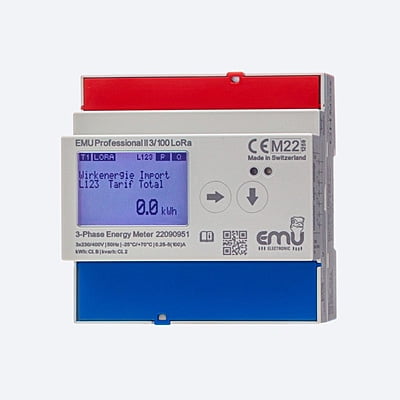
EMU Professional II 3/100 Lora ext. Ant
£290.00
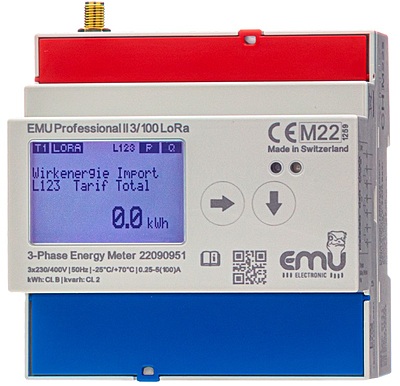
EMU Professional II 3/5 LoRa External Antenna
£270.00
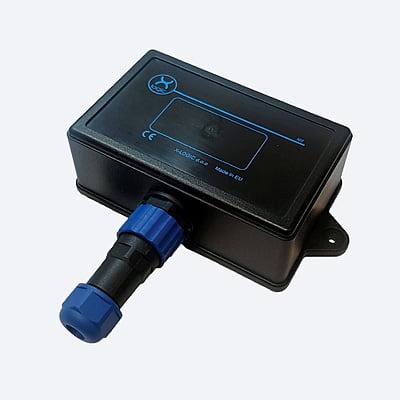
X-Logic IoT LoRaWAN Pulse Counter
£129.00

FAQ

How does an energy monitor work?
An energy monitor measures how much electricity, gas, water or heat is being used and reports it somewhere you can see it. How it takes the reading depends on the type.

Direct measurement devices sit on the supply and calculate consumption themselves. They measure current using a clamp or coil around the cable, measure voltage from the supply, and combine the two to give real power in kilowatts and cumulative energy in kilowatt hours. This gives a full picture including power factor, which matters for larger loads.

Pulse counting devices do not measure anything themselves. They connect to the pulse output already built into most utility meters, where the meter emits a short electrical pulse for each unit consumed, such as one pulse per kilowatt hour or per litre. The counter tallies the pulses and reports the running total, which lets you automate readings from meters you already own. Either way, the reading is sent at a set interval over LoRaWAN to a gateway and on to your monitoring platform or BMS, so no one has to visit the meter to read it.
How does a current sensor work?
A current sensor measures the electrical current flowing through a cable without making any electrical connection to it. When current flows through a conductor it creates a magnetic field around it, proportional to the size of that current. The sensor detects that field and converts it back into a current reading. Two designs are common:
  • A current transformer, usually called a CT clamp, has a split iron core that opens and closes around the cable. The cable acts as the primary winding, and the magnetic field induces a small, precisely scaled current in the sensor's secondary winding. A 100A CT, for example, might output 50mA when the cable is carrying 100A.
  • A Rogowski coil is a flexible loop that wraps around the cable instead. It has no iron core, so it is lighter, will not saturate at high currents, and can be threaded around awkward busbars and thick cables where a rigid clamp will not fit.

Both are non-invasive. The clamp or coil goes around the outside of the insulated cable, so the circuit does not need to be broken and the supply does not need to be isolated to fit one.
What are the use cases for a smart energy monitor?
The common thread is turning a single bill into data you can act on.
  • Sub metering and tenant recharging. Bill individual tenants, units or departments for what they actually use rather than apportioning by floor area.
  • Finding out of hours waste. Half hourly data quickly reveals plant that never switches off, which is often the largest single saving available.
  • Measurement and verification. Prove the savings from an efficiency project by comparing consumption before and after, which most funding and grant schemes require.
  • ESG and compliance reporting. Provide auditable consumption figures for schemes such as SECR and ESOS, and for net zero reporting.
  • Automated meter reading. Remove manual meter reads across multi site estates, along with the estimated bills that follow when someone cannot get to the cupboard.
  • Leak and overuse alerts. Continuous water or gas readings flag consumption that continues overnight when a building is empty.
What are the use cases for a smart current sensor?
Current sensors are used both for energy measurement and, just as often, simply to know whether something is running.
  • Circuit level breakdown: Fit CTs across a distribution board to see which circuits are driving consumption, without disturbing the load.
  • Plant status monitoring: Current draw is a reliable proxy for run status. If a pump or fan is drawing current, it is running, which is more trustworthy than a control signal that assumes it is.
  • Fault detection: A motor drawing steadily more current over weeks usually indicates a bearing or belt problem, so faults can be caught before failure.
  • Runtime logging: Accumulate hours run for maintenance scheduling and warranty records.
  • Temporary surveys: Because they clip on and off without isolation, CTs are ideal for short term energy surveys before committing to permanent metering.
  • Retrofit into live buildings: In occupied sites where a shutdown is impossible, non invasive sensors are often the only practical option.
Do I need to isolate the supply to fit a current sensor?
The sensor itself makes no electrical connection to the cable it measures, so in principle the circuit can stay live. In practice, the answer depends entirely on where the sensor has to go. The clamp or coil fits around the outside of an insulated conductor, which is why current sensors are described as non invasive. What determines whether isolation is needed is the enclosure, not the sensor. Fitting a CT inside a distribution board or panel means working near exposed live parts, and under BS 7671 and the Electricity at Work Regulations that work should be carried out dead unless it is unreasonable in all the circumstances for it to be so. Live working requires justification, a risk assessment and suitable precautions, and it is not something to undertake casually just because the sensor allows it. In real installations that usually means:
  • Isolation preferred. Most sites arrange a short shutdown, often out of hours, and fit several sensors in one visit. It is the simplest and safest route.
  • Live working where a shutdown is genuinely impossible. Data centres, hospitals and continuous process sites sometimes fall into this category. It should be done by a competent person, working to a risk assessment and method statement, with appropriate PPE and insulated tooling.
  • Rogowski coils where access is tight. Because the flexible coil threads around busbars and large cables that a rigid clamp will not fit, it often reduces how much disturbance is needed inside the panel.

Whichever route you take, the work is for a qualified electrician. If you are planning a survey across several boards, it is worth counting the circuits first and booking a single isolation window rather than returning repeatedly.
Items have been added to cart.
One or more items could not be added to cart due to certain restrictions.
Added to cart
- There was an error adding to cart. Please try again.
Quantity updated
- An error occurred. Please try again later.
Deleted from cart
- Can't delete this product from the cart at the moment. Please try again later.