





Shop/Products // Wireless I/O Modules and Controllers //

Wireless I/O Modules and Controllers

Wireless I/O modules and controllers connect equipment that was never designed to be networked. Analogue and digital inputs read existing sensors, switches, meters and status contacts; relay and output channels drive valves, actuators and plant directly. Modbus RTU models act as a bridge, polling a device you already have and reporting its registers wirelessly.


They are typically used where a signal exists on site but there is no practical way to get it back to a controller, which might be a remote plant room, a rooftop, a site with no spare cable route, or an occupied building where installing containment would be disruptive and expensive. Because everything reports over LoRaWAN, one gateway can serve a whole site, and battery powered models can be fitted where there is no local supply at all.


Wireless I/O Modules and Controllers

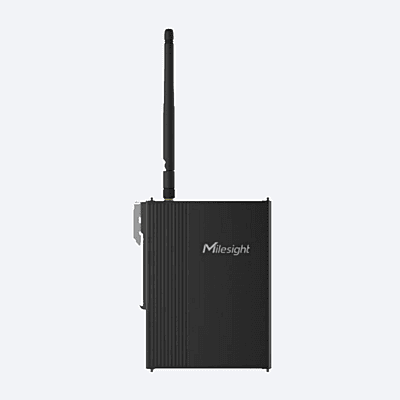
Milesight UC100 LoRaWAN Controller
£45.00
Milesight UC100-EA LoRaWAN Controller (External Antenna)
£49.00
Milesight UC300 LoRaWAN IoT Controller with LTE / Inbuilt 4G Modem
Milesight UC300 IoT Controller with LTE / Inbuilt 4G Modem
£169.00
Milesight UC300 LoRaWAN IoT Controller
£129.00
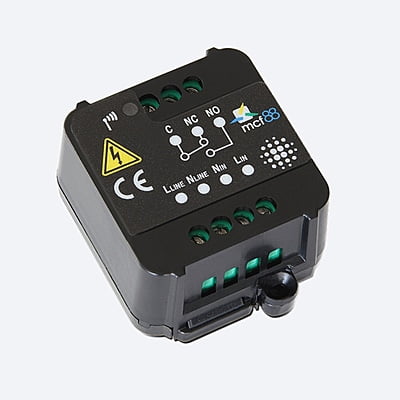
MCF88 MCF-LW13IO LoRaWAN Actuator in black.
MCF88 MCF-LW13IO LoRaWAN Actuator
£109.00
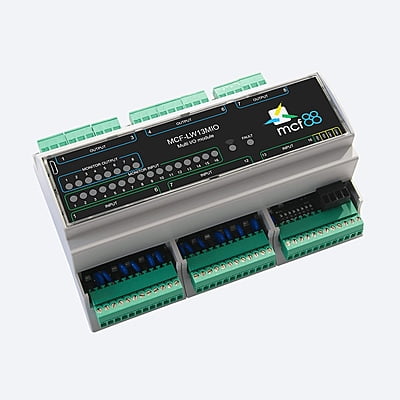
MCF88 MCF-LW13MIO LoRaWAN Multi I/O Module
£299.00
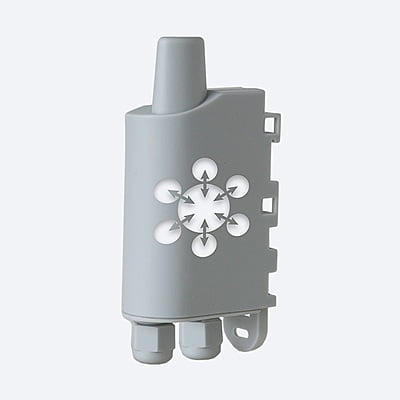
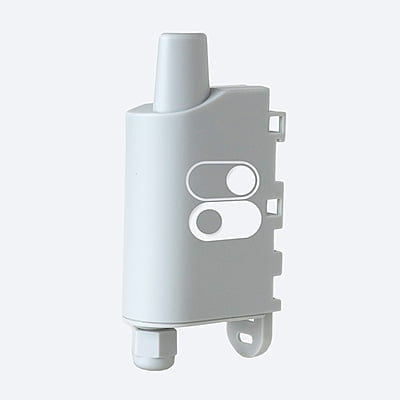
Adeunis LoRaWAN Analog wired sensor interface (Battery)
£109.00
Adeunis LoRaWAN Modbus interface for Modbus slaves
£189.00
Adeunis LoRaWAN Dry Contacts - 0-1 status
£79.00
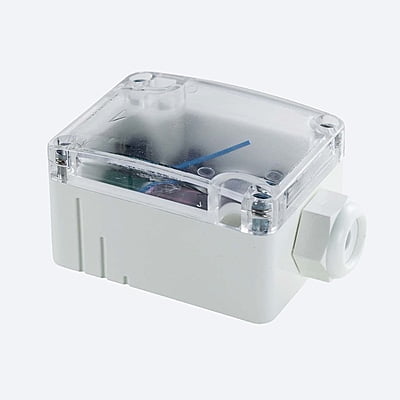
SR65 DI
SR65 DI
£90.48
SR65 DIAdd to Cart
£90.48
SR65-3AI
SR65-3AI
£90.48
SR65-3AIAdd to Cart
£90.48

FAQ

How do wireless I/O (Input/Output) modules work?
An I/O module is the bridge between physical signals and a network. It has terminals on one side and a radio on the other. On the input side, the module reads what the connected equipment is producing. A digital input registers a simple open or closed contact (covering switches, float valves, door contacts, alarm relays and meter pulse outputs). An analogue input reads a varying signal (most commonly 0 to 10V or 4 to 20mA), which is what the majority of industrial sensors output for pressure, flow, level and temperature. The module converts that reading into a value, so 4 to 20mA becomes an actual figure in the correct engineering units once scaled at configuration.

On the output side, the process runs in reverse. A command arrives over the network and the module closes a relay or produces an analogue signal, switching a pump, opening a valve or setting a fan speed. Modbus capable models work differently again. Rather than reading raw electrical signals, they poll an existing Modbus RTU device over RS485, request specific registers and forward those values on. This is how meters, inverters and packaged plant with their own controller get brought onto the network.
What is the use case for an I/O module?
  • Retrofitting existing plant - boilers, chillers, pumps, generators and lift controllers nearly always have volt free status and fault contacts on the panel. An I/O module reads them and puts plant status on your dashboard without touching the equipment itself.
  • Bringing wired sensors onto a wireless network - a 4 to 20mA pressure or flow transmitter that would otherwise need a cable run back to a controller can report wirelessly instead.
  • Remote and unmanned sites - pumping stations, substations, water tanks and rooftop plant, where running cable is either impossible or costs more than the whole project.
  • Meter pulse collection - counting the pulse output from existing utility meters to automate readings.
  • Extending an existing BMS - adding a handful of points to a system that has run out of capacity, or reaching an outbuilding the network never reached.
  • Remote switching and control - driving valves, pumps, immersion heaters or lighting contactors from a schedule or from sensor data elsewhere on site.
  • Temporary and trial installations - because nothing is permanently wired, modules can be fitted for a survey or pilot and removed cleanly afterwards.
Items have been added to cart.
One or more items could not be added to cart due to certain restrictions.
Added to cart
- There was an error adding to cart. Please try again.
Quantity updated
- An error occurred. Please try again later.
Deleted from cart
- Can't delete this product from the cart at the moment. Please try again later.