





Shop/Products // Weather Stations and Outdoor Monitoring //

Smart Weather Stations and Outdoor Monitoring

Outdoor monitoring covers everything happening beyond the building envelope, from wind and rainfall to external temperature, light levels, air quality and water levels in tanks, gullies and watercourses. If it's measurable, we have a device for it.


The data has two uses: it drives control decisions, since heating compensation, external lighting, blinds and irrigation all work better against real conditions than a fixed schedule. It also provides context for everything else you measure, because internal readings are difficult to interpret without knowing what the weather was doing at the time.


Our range includes multi parameter weather stations, external temperature and light sensors, outdoor air quality monitoring and water level sensors for below ground use. All are IP rated for permanent exposure and report over LoRaWAN, so they can be sited on roofs, in car parks and across remote parts of a site without cabling.
Weather Stations and Outdoor Monitoring

Sale
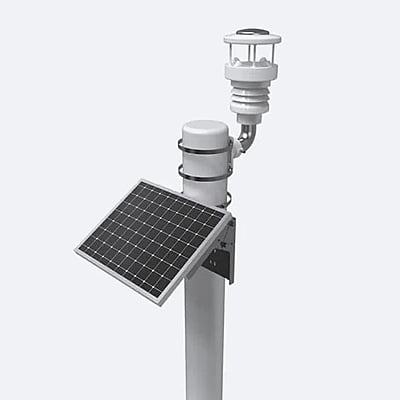
Milesight WTS506 LoRaWAN Weather Station
£2,399.00 £2,799.00
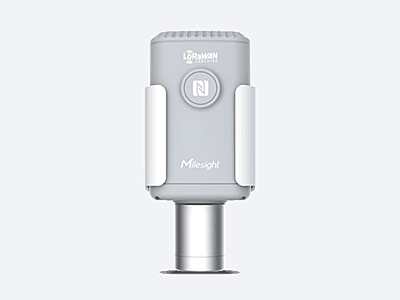
Milesight EM500-CO2 Outdoor LoRaWAN Sensor
£170.00
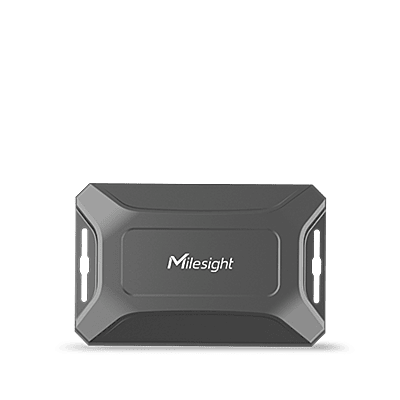
Milesight AT101 Outdoor Asset Tracker
£108.00
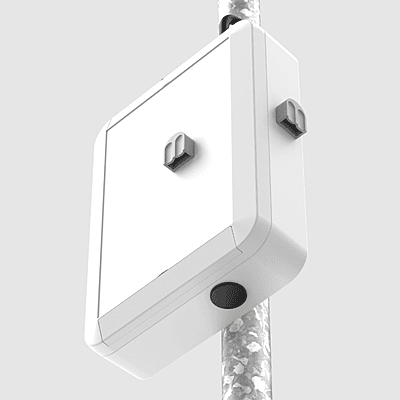
Nexelec PMO Outdoor Air Quality Micro-station
£1,604.00 - £1,783.00
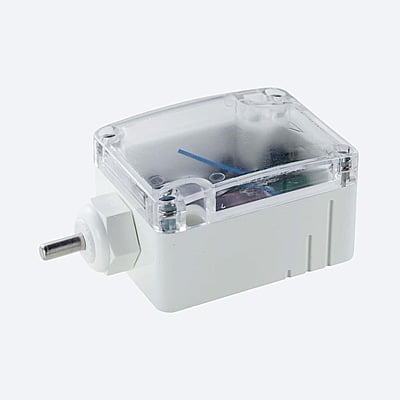
SR65 Outdoor Temperature Sensor
£90.48
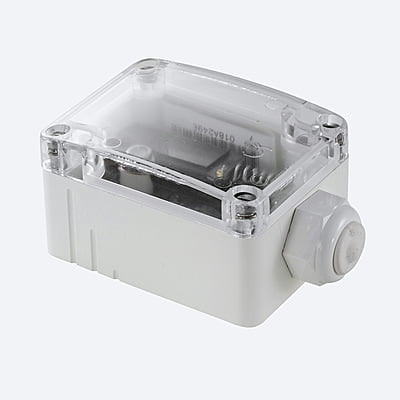
SR65 Li Wireless Outdoor Light Sensor
£121.00
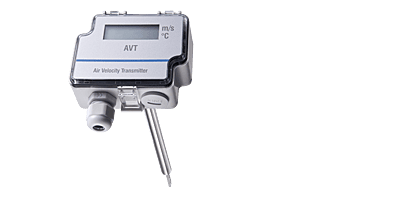
AVT Air Velocity Sensor
£98.00

FAQ

Why would I measure the outside of my facility?
Almost everything a building does in response to conditions is a response to outdoor conditions, and without measuring them you are controlling on assumptions. Three reasons come up most often:
  • It makes control work properly. Weather compensation adjusts flow temperature against outside air temperature, so the heating system works harder on a cold morning and eases off on a mild one, rather than running the same output regardless. External light sensing does the same job for lighting and blinds, switching or dimming against actual daylight instead of a clock that drifts out of step with the seasons. Irrigation, frost protection and snow melting all depend on it too.
  • It gives context to your internal data. A room that hit 26 degrees tells you very little on its own. Knowing it was 28 outside, or that it was 12 outside and the room still overheated, tells you whether you have a solar gain problem or a controls problem. The same applies to consumption. Comparing this January's gas use to last January's is meaningless until you normalise for degree days, and that calculation needs local outdoor temperature.
  • It flags things before they become incidents. Water levels rising in a gully or watercourse, wind speeds that mean roof access should stop or louvres should close, freezing conditions on an exposed pipe run, or deteriorating external air quality that suggests keeping ventilation dampers shut. Each of these is easier to manage with warning than after the event.

There is also a straightforward accuracy argument. Nearest weather station data can be many miles away and will not reflect your site's own microclimate, shading, exposure or urban heat island effect. If the data is driving control decisions, it should come from your roof rather than from an airport twenty miles away.
How do smart weather stations work?

A weather station combines several sensors in one weatherproof housing, takes readings continuously, and transmits them wirelessly at a set interval. The sensing varies by parameter. Temperature and humidity are measured inside a radiation shield, the louvred housing that keeps direct sun off the sensor so it reads air temperature rather than solar heating. Barometric pressure uses a sealed pressure sensor. Rainfall is usually measured by a tipping bucket, a small see saw that tips and registers a count each time a fixed volume collects. Light and UV use photodiodes calibrated to the relevant part of the spectrum.


Wind is where designs differ most. Traditional stations use a spinning cup anemometer and a wind vane, which are accurate but have moving parts that wear and can seize. Ultrasonic models measure instead by timing sound pulses between transducers, since wind alters how long a pulse takes to travel across the gap. With no moving parts they need far less maintenance, which matters when the unit is on a roof.


Readings are transmitted over LoRaWAN to a gateway and on to your platform or BMS. Reporting intervals are configurable, typically every ten to sixty minutes, with a shorter interval trading battery life for resolution. Power is usually a long life battery, often supported by a small solar panel, so no supply is needed at the mounting position.

Siting matters more than specification; a station in the lee of a plant enclosure will under-read wind, one above a dark flat roof will over-read temperature, and one under an overhang will under-read rainfall. The general guidance is open exposure, well clear of obstructions, with the sensor mounted at a consistent height so readings stay comparable over time.

Items have been added to cart.
One or more items could not be added to cart due to certain restrictions.
Added to cart
- There was an error adding to cart. Please try again.
Quantity updated
- An error occurred. Please try again later.
Deleted from cart
- Can't delete this product from the cart at the moment. Please try again later.